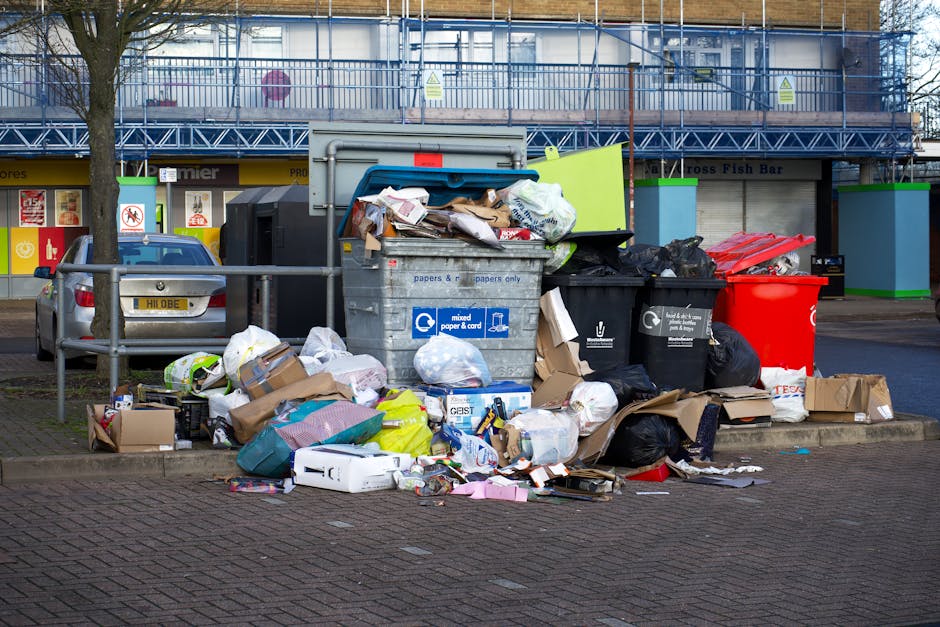
Castle Square Commercial Waste Pickup Elephant and Castle: A Practical Guide for Businesses, Landlords, and Site Managers
If you need Castle Square commercial waste pickup Elephant and Castle, you probably want the same three things most people want: fast collection, no mess left behind, and a service that simply does what it says. Fair enough. In a busy part of London, waste has a habit of building up quickly - one delivery day, one refit, one office clear-out, and suddenly there are cardboard stacks, broken fixtures, old chairs, and bags that really should not be sitting around any longer than necessary.
This guide explains how commercial waste pickup in the Castle Square area works, who it suits, what to expect, and how to avoid the common mistakes that turn a straightforward collection into a headache. You'll also find a practical checklist, a comparison of pickup options, and a few grounded tips from the sort of real-world situations that tend to crop up at the worst possible moment. You know the ones.
Why Castle Square commercial waste pickup Elephant and Castle Matters
Commercial waste is not just "rubbish". For a business, it affects space, safety, presentation, and sometimes operations themselves. If you run a shop, manage a block, oversee a refurbishment, or keep an office ticking over, waste starts to influence how smoothly the day runs. A cluttered back area can slow staff down. Overflowing bins can create odours. Uncollected packaging can make a site look messy to clients, contractors, or residents.
Castle Square sits in an area where space is valuable and access can be awkward. That alone makes planned pickup more important. If collections are late or badly organised, the problem tends to spread fast: blocked loading areas, poor housekeeping, annoyed neighbours, and that familiar sense that the tidy-up job somehow became a bigger job than the original project. Happens all the time, honestly.
There is also the trust factor. Businesses in and around Elephant and Castle often need a collection partner that understands commercial loads, mixed waste, and the realities of urban access. That means sensible arrival windows, clear communication, and a process that handles more than just "take this away." It should also support sorting, recycling, and safe handling where needed. If your waste includes office items, furniture, appliances, or construction debris, the service needs to be able to manage it without fuss.
Expert summary: In a dense London location like Castle Square, the best commercial waste pickup is the one that protects your time, your access routes, and your reputation while keeping disposal practical and compliant.
How Castle Square commercial waste pickup Elephant and Castle Works
The process is usually simpler than people expect. In most cases, commercial waste pickup starts with identifying what needs removing, how much there is, and whether any items need special handling. That could be everything from office bagged waste to bulky items, renovation debris, old shelving, or a one-off clear-out after a tenant move.
A good service will usually ask a few practical questions before collection: What type of waste is it? Is it bagged, loose, or bulky? Is there lift access? Can the vehicle stop nearby? Are there any items that need separate disposal, such as electricals or hazardous materials? The better the answers, the smoother the visit. No drama. Just less back-and-forth.
For businesses that also need help with larger clearances, related services such as business waste removal, office clearance, or builders waste clearance may be relevant depending on the load. If the waste is a mix of furniture, fixtures, and general rubbish, a broader waste removal service can often be more efficient than trying to split everything into separate jobs.
In practical terms, pickup can involve:
- arrival at an agreed time window
- assessment of the waste on site
- safe loading by the team
- sorting for reuse, recycling, or disposal where possible
- final clearance and a quick check that the area is left tidy
That final tidy-up matters more than people think. You notice it immediately when it's done well - the corridor opens up again, the smell goes, the light comes back into the room. A small thing, but a real relief when you've had bags stacked by the wall for three weeks.
Key Benefits and Practical Advantages
There are several reasons businesses in Castle Square and the wider Elephant and Castle area choose a dedicated commercial pickup rather than trying to handle waste informally.
First, it saves time. Staff should not be spending half a day shifting old desks or ferrying bin bags around London in hired vans. That's not a productive use of anyone's time, and to be fair, it usually turns into two jobs instead of one.
Second, it improves safety. Loose waste, stacked cartons, broken furniture, and debris all create trip risks and block routes. For sites with visitors, residents, or contractors, that's not just untidy - it is a live operational issue.
Third, it supports better space management. In central or high-density locations, usable storage is precious. Getting waste out quickly means staff can access what they actually need: stock, tools, deliveries, or workspace.
Fourth, it helps with presentation. If you are meeting clients, keeping a retail frontage tidy, or trying to hand a property back in good condition, waste pickup makes a visible difference. People do notice these things, even if they don't say so.
Fifth, it encourages more responsible disposal. Where recyclable materials can be separated, and where specialist waste has to be treated properly, a professional approach is simply more reliable than ad hoc dumping or mixed loading without planning.
For specific items, dedicated pages such as furniture disposal, fridge and appliance removal, and confidential shredding can be useful if your pickup includes more sensitive or bulky items.
Who This Is For and When It Makes Sense
Commercial waste pickup is not only for large companies. It is just as useful for smaller operations that generate irregular waste or have limited storage. In and around Castle Square, that often includes:
- independent offices and co-working spaces
- retail units and hospitality venues
- landlords and letting agents
- builders and refurbishment teams
- property managers and block supervisors
- start-ups and small firms with little back-of-house storage
- businesses moving premises or closing a site
It also makes sense when waste becomes lopsided - meaning you don't have a regular bin issue, but rather a big one-off load. That might be after an office refresh, a stock room clear-out, a shop refit, a tenant departure, or the end of a short construction phase. In those cases, a recurring bin contract may be overkill, while a one-off pickup is the neatest solution.
If the load overlaps with household-style items from a commercial property, you may also want to look at flat clearance, house clearance, or home clearance. These are especially relevant for mixed-use buildings, landlord turnarounds, or furnished lets. That mix happens more than you'd think.
One useful way to judge whether you need pickup now is simple: if waste is taking up valuable access space, affecting hygiene, or getting in the way of work, it's time. Don't wait for the "we'll sort it next week" conversation to become a storage strategy. That rarely ends well.
Step-by-Step Guidance
If you want the process to run smoothly, it helps to treat waste pickup like any other operational task. Quick decisions later often cost more time than careful planning now.
- Identify the waste type. Separate general commercial waste from recyclables, bulky items, electricals, and anything that may need special handling.
- Estimate the volume. A rough idea of how many bags, items, or cubic yards are involved helps the team plan the right vehicle and crew size.
- Check access. Think about stairs, lifts, loading bays, permits, narrow roads, and the time of day traffic is likely to be heaviest.
- Remove anything that should stay. Sensitive files, customer property, reusable stock, and any equipment you still need should be set aside clearly.
- Book the pickup. Use a service that can confirm timing, scope, and expectations clearly. For one-off jobs, book online if that suits your workflow.
- Prepare the site. Stack waste in an accessible place where safe to do so, and make sure staff know what is being collected.
- Walk through the load. Before the team leaves, check the area and confirm nothing has been missed.
That last step is tiny but valuable. A quick five-minute check can save an annoying follow-up call later, and it also helps if you're managing the job for someone else. You want clarity, not guesswork.
Expert Tips for Better Results
After enough clear-outs, a few habits stand out as consistently useful.
Keep waste types separate where practical. Even simple separation - cardboard, furniture, electricals, general rubbish - can make collection faster and more efficient. It also makes it easier to keep the site tidy while you wait for pickup.
Photograph the load before collection. Not for drama. Just for record-keeping. If you manage multiple units or sites, a quick photo helps track what was removed and from where.
Book a little earlier than you think. In busy London spots, traffic, access constraints, and building activity can make the best-laid plan wobble. A bit of buffer time helps more than people expect.
Ask about recycling and sorting. A decent provider should be able to explain how they handle materials and where items are likely to go next. If sustainability matters to your business, that conversation is worth having. You can also review a provider's approach through pages like recycling and sustainability.
Be clear about awkward items. Mattresses, sofas, appliances, sharps, and unknown chemicals are not "just more rubbish." They need special handling or a separate plan. The sooner you say so, the easier the job becomes.
Use the right service for the job. A small office clear-out and a builder's strip-out are different beasts. Matching the service to the waste load is one of the simplest ways to avoid delays and surprise costs. It sounds obvious, but people miss it all the time.
Common Mistakes to Avoid
Most problems with commercial pickup are avoidable. The tricky bit is that they usually look harmless at the start.
- Leaving identification of waste too late. If you only assess the load on collection day, you may discover items that require separate handling.
- Underestimating access issues. A vehicle may be close in theory and awkward in practice. Elephant and Castle is lively, and loading can be more complicated than it looks on a map.
- Mixing confidential or sensitive material into general waste. Shredding or secure disposal may be needed for documents and records.
- Forgetting appliance rules. Fridges, freezers, and other electrical items should be treated as their own category when planning removal.
- Assuming bulky items are "easy enough". Furniture takes space, can be awkward on stairs, and often needs more than one pair of hands.
- Not checking the final area. Small leftover items are easy to miss when everyone is in a hurry.
A slightly messy setup can still be fixed. The real mistake is pretending it is already organised when it isn't. Better to pause, sort properly, then move. Saves hassle later, every time.
Tools, Resources and Recommendations
You do not need a complicated toolkit to manage a pickup well. In fact, the best support is usually a simple mix of planning, clear labelling, and the right service page for the type of waste you have.
Useful internal resources on this site include:
- pricing and quotes for understanding how a job is likely to be scoped
- payment and security if your business prefers clear transaction safeguards
- insurance and safety for reassurance on site risk management
- health and safety policy where workplace safety is a top concern
- what can go in a skip if you are comparing skip-style disposal with pickup
For larger or more specialised jobs, pages like mattress and sofa disposal, garage clearance, and loft clearance can also help you narrow down the right disposal route. Sometimes the job is more mixed than expected. One cupboard full of old inventory has a habit of becoming three separate waste streams by lunchtime.
Law, Compliance, Standards, or Best Practice
Commercial waste in the UK should be handled with care, especially where businesses have a duty to keep premises safe and disposal records sensible. This article does not replace legal advice, but a few best-practice points are worth keeping in mind.
Duty of care matters. Businesses should use a proper waste carrier and be confident that waste is being handled responsibly. That includes knowing what is being removed and where it is likely to go.
Keep records where appropriate. For commercial waste pickups, having an internal note of what was collected, when it was collected, and by whom can be useful for audits, landlord records, or general housekeeping. It is one of those boring tasks that saves time later.
Segregate hazardous or specialist waste. Items such as chemicals, oils, certain electricals, or contaminated materials may need separate arrangements. If you are not sure, stop and check before mixing them into general waste.
Respect site safety. Collections should not create a hazard for staff, residents, or the public. Clear walkways, sensible stacking, and good communication all help reduce risk.
Match collection to the type of waste. Builders' debris, office furniture, appliance waste, and confidential paper are not identical. The more accurately you classify the load, the easier it is to stay compliant and avoid unpleasant surprises.
There's no need to make compliance feel scary. In most cases, it's just about being organised and honest about the load. That's it really.
Options, Methods, or Comparison Table
When planning Castle Square commercial waste pickup Elephant and Castle, businesses often compare three main approaches: one-off pickup, regular waste collection, and skip-style disposal. The right answer depends on space, waste type, and how quickly the waste needs to go.
| Option | Best for | Strengths | Things to watch |
|---|---|---|---|
| One-off commercial pickup | Clear-outs, bulky waste, project leftovers | Fast, flexible, little on-site storage needed | Needs clear prep and accurate waste description |
| Regular collection | Ongoing business waste and routine disposal | Predictable, convenient for steady waste volumes | Can be less efficient for occasional large loads |
| Skip-style disposal | Longer projects with space for a skip on-site | Useful for phased loading over time | Requires space and may be less practical in tight access areas |
In many Castle Square jobs, the deciding factor is space. If you cannot easily spare room for a skip or keep waste on site for long, pickup is usually the cleaner option. If you have a steady stream of similar waste, routine service may be more sensible. The trick is choosing the format that fits the actual day-to-day reality, not the ideal version of it.
Case Study or Real-World Example
Imagine a small office near Castle Square that has decided to replace its desks, clear old archive boxes, and remove a few broken chairs after a modest refit. Nothing dramatic. But by Friday afternoon, the room is half full, the corridor is tighter than usual, and the team is trying to work around stacked items while still answering phones and receiving deliveries.
Instead of asking staff to move everything piecemeal, the manager books a commercial pickup. Before collection, they separate confidential documents for shredding, set aside reusable office supplies, and group the bulky furniture in one area. The team arrives, loads the waste efficiently, and clears the space in a single visit. The office can open up again the same day, and the refit looks finished rather than abandoned halfway through.
That sort of job is quite common. It is not about huge volumes. It is about removing friction. The best pickups do exactly that - quietly, without making a song and dance of it.
Practical Checklist
Use this before booking your pickup. It keeps things simple and avoids those awkward "oh, we forgot that" moments.
- Have I identified all waste types clearly?
- Do I know which items are bulky, confidential, electrical, or potentially hazardous?
- Have I checked access, stairs, lifts, loading space, and timing?
- Is there a clear place for waste to be stacked safely before collection?
- Have staff or contractors been told what is being removed?
- Are any documents, stock, or valuables set aside separately?
- Do I need a one-off pickup, a regular service, or a different disposal method?
- Have I reviewed pricing and payment information first?
- Do I know who is responsible for checking the area after collection?
- Have I asked about recycling or specialist handling where relevant?
If you can tick most of those off, you are in very good shape. If not, no problem - sort the gaps first. It's a lot easier than trying to fix them mid-collection.
Get a free quote today and see how much you can save.
Conclusion
Castle Square commercial waste pickup Elephant and Castle is, at heart, about making business life easier. When waste is handled well, the site feels safer, staff work more comfortably, and the property presents better to everyone who walks through the door. That might sound modest, but it matters. A lot.
The best results come from a simple formula: define the waste properly, plan access sensibly, choose the right type of pickup, and work with a service that understands the demands of London properties. Do that, and even a messy clear-out becomes manageable. Maybe not exciting, but manageable - which is usually what you want.
And once the waste is gone, the space feels different. Quieter. Cleaner. A bit lighter. That's often the point when people realise how much they were carrying around in the first place.
Frequently Asked Questions
What does Castle Square commercial waste pickup Elephant and Castle usually include?
It usually includes the removal of business waste such as bagged rubbish, cardboard, office clutter, furniture, and other commercial items depending on the job scope. The exact load should always be confirmed in advance.
Is commercial waste pickup better than using a skip?
It depends on space, access, and the type of waste. Pickup is often better when access is tight or the waste needs removing quickly. A skip can suit longer projects if you have room to place it safely.
How do I know if my waste needs special handling?
If it includes appliances, confidential paperwork, chemicals, contaminated materials, or unusual items, it may need separate handling. When in doubt, describe the waste clearly before booking.
Can I mix office furniture with general rubbish?
Sometimes mixed loads can be collected together, but it is still better to separate items where practical. That makes the job easier to assess and helps avoid delays if certain materials need different treatment.
What if I only have a small amount of commercial waste?
Small loads still make sense for pickup if they are awkward, bulky, or taking up valuable space. A small collection can be far more efficient than asking staff to deal with it themselves.
How much notice should I give for a pickup?
As much as you reasonably can. Busy London locations can involve access constraints and traffic delays, so earlier planning usually helps. Even a short delay in booking can make a big difference on site.
Do I need to sort recyclable items first?
It is not always mandatory to separate everything, but it is usually a good idea. Sorting cardboard, furniture, and electricals where practical can make the process smoother and may improve recycling outcomes.
What happens if access is difficult around Castle Square?
The team will usually need clearer instructions and possibly a more exact arrival plan. Narrow roads, loading restrictions, and building access can all affect the job, so it's worth flagging these early.
Can commercial waste pickup help with an office move?
Yes. Office moves often generate a mix of unwanted furniture, packaging, old equipment, and clear-out waste. A pickup service can be a practical way to clear the leftovers once the main move is done.
Is confidential shredding worth arranging separately?
Yes, if you have paper records or sensitive documents. It keeps personal or business information out of the general waste stream and gives you a cleaner, more controlled process.
What should I check before the team arrives?
Check the waste type, access, stacking space, and whether anything should be removed from the load. A quick pre-check prevents confusion and makes the visit far more efficient.
Where can I find more details about the company behind the service?
If you want a better sense of the business, the about us page is a sensible place to start. For questions, the contact us page is also available.
What if I need to compare prices before booking?
That is sensible. Start with the pricing and quotes page and make sure you understand what is included, especially for bulky or mixed waste.
Can commercial pickup be arranged for furniture-heavy clear-outs?
Absolutely. Furniture-heavy jobs are common, especially in offices, flats, and mixed-use properties. Related services such as furniture clearance and mattress and sofa disposal can be helpful depending on the load.
If you are planning a clearance in or around Elephant and Castle, a clear waste plan now will save you trouble later. And honestly, that is usually the best kind of admin - the kind you only have to do once.